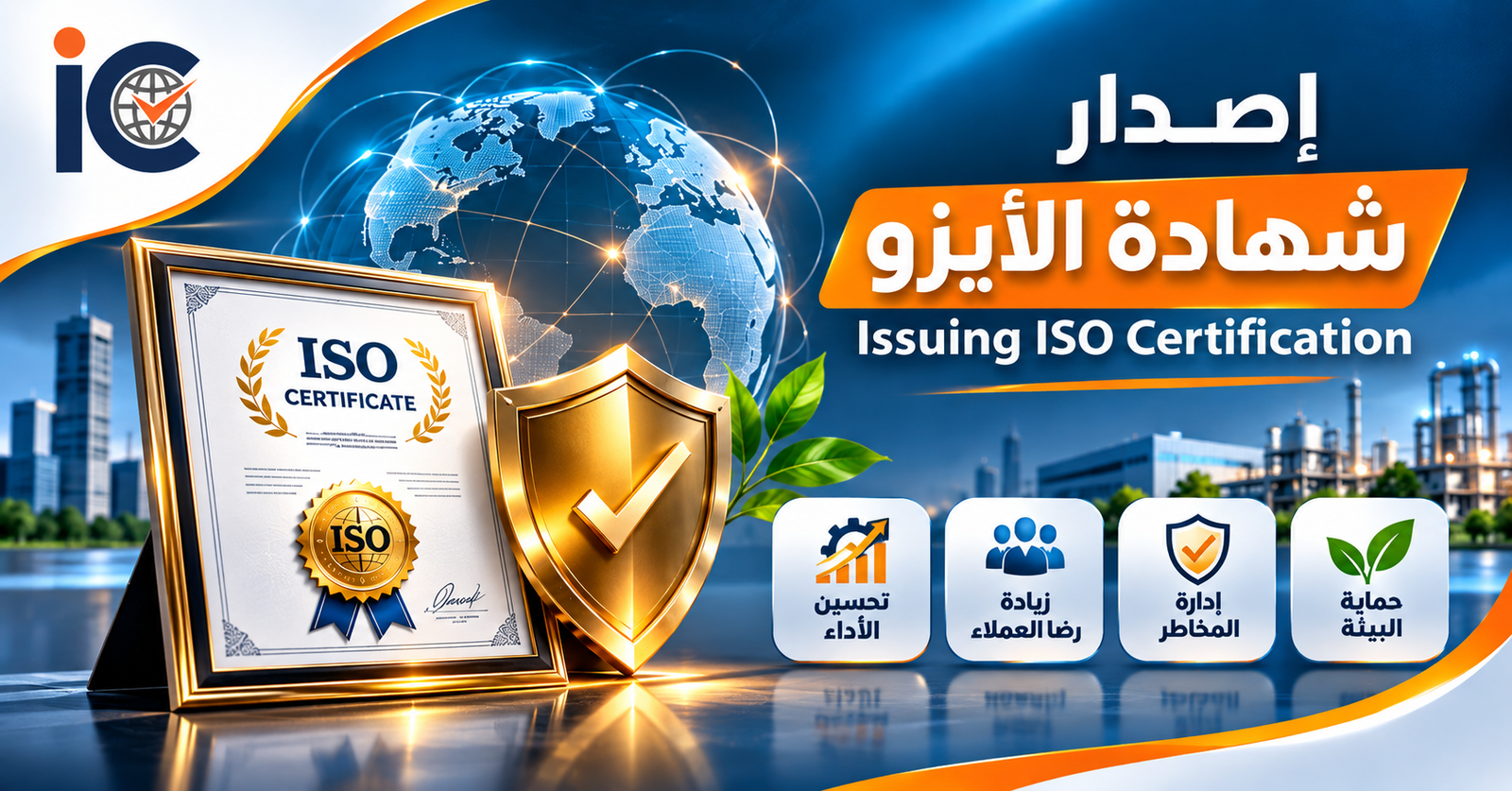
The journey of Issuing ISO Certification is not merely a procedural step or bureaucratic formality.
Rather, it is a transformative process that organizations undertake to demonstrate compliance with internationally recognized standards.
In today’s fast-paced global environment—where industries are evolving at an unprecedented rate and competition is intensifying both locally and internationally.
ISO certification can help organizations demonstrate that their management systems conform to the requirements of a specific international standard within the defined certification scope.
It can also support improvements in operational control, customer confidence, and organizational performance.
Furthermore, this certification establishes a structured framework for building customer trust, enhancing credibility, and ensuring long-term resilience in increasingly competitive and complex markets.
Thus, ISO certification has emerged as a trusted reference point for organizations striving to establish themselves as reliable, forward-looking, and customer-focused entities.
One of the most pivotal milestones in this journey is the moment a company secures its ISO certificate—a turning point that often defines its professional reputation and growth trajectory.
Understanding ISO Certification
Before delving into the process of Issuing ISO Certification, it is essential to understand what ISO certification truly represents.
ISO certification is a formal confirmation issued by an independent certification body after assessing an organization’s management system and verifying its conformity with the requirements of a specific ISO standard.
The certification process involves an independent audit to determine whether the organization meets the applicable requirements.
These standards are comprehensive, covering a wide range of domains, including:
– Quality Management (ISO 9001).
– Environmental Management (ISO 14001).
– Occupational Health & Safety (ISO 45001).
– Information Security (ISO 27001).
– Food Safety (ISO 22000).
Each certification type is tailored to the specific nature of an organization’s activities, ensuring that the applied standards are relevant and industry-specific.
Importance of Issuing ISO Certification
√ Optimizing Resources
√ Enhancing Customer Satisfaction
√ Promoting Sustainability
√ Strengthening Risk Management
√ Creating Safer Work Environments
√ Protecting Environmental Resources
√ Data-Driven Decision Making
√ Meeting Government Requirements
√ Empowering Employees
Issuing ISO Certification
⇒The Role of Accreditation Bodies
The process of Issuing ISO Certification is a strategic step that organizations pursue to strengthen their competitive position in both local and global markets.
However, it is crucial to clarify that the International Organization for Standardization (ISO) itself does not issue certificates.
Instead, its role is limited to developing the standards and guidelines.
Certification bodies are responsible for auditing organizations’ management systems and issuing ISO certificates when conformity is demonstrated.
Accreditation bodies, on the other hand, assess the competence and impartiality of certification bodies against applicable international requirements.
These are two separate roles within the conformity assessment system.
This distinction is extremely important, as the credibility of ISO certification depends entirely on the certifying authority.
Not all service providers can issue certificates with global recognition.
⇒The Role of Accreditation Bodies in Issuing ISO Certification
Accreditation bodies play a central role in ensuring the integrity, impartiality, and credibility of the Issuing ISO Certification process.
They are responsible for evaluating and monitoring certification bodies to confirm that they operate effectively and adhere to globally recognized standards.
Accreditation by a recognized accreditation body can strengthen confidence in a certification body’s competence and the credibility of its certificates.
However, acceptance of a certificate may depend on the applicable accreditation scope, market requirements, customer expectations, and regulatory conditions.
The IAF defines accreditation as:
> “The independent evaluation of conformity assessment bodies (CABs) to confirm their competence and impartiality, thereby providing confidence to governments, businesses, and consumers in testing, inspection, and certification outcomes.”
This definition makes it clear that accreditation is not merely a procedural requirement; it is a robust guarantee of quality, trust, and international recognition.
⇒ International Accreditation Bodies
To better understand the scope of accreditation in Issuing ISO Certification, here are some of the world’s leading accreditation bodies:
– UKAS – United Kingdom
– EMA – Mexico
– ANAB – United States
– IAS & UAF – United States
– JAS-ANZ – Australia & New Zealand
– ENAC – Spain
– ONAC – Colombia
– OUA – Uruguay
– INTECO – Costa Rica
– INN – Chile
Each of these accreditation bodies operates in compliance with internationally recognized standards, ensuring that certifications issued under their supervision are both reliable and globally accepted.
For example, a certificate accredited by UKAS, ANAB, or IAS is highly respected in international markets, providing organizations with stronger credibility and competitive advantage.
Choosing ISO Certification Body
One of the most common mistakes organizations make when pursuing Issuing ISO Certification is basing their decision solely on cost.
While affordability is an important factor, it should never be the only criterion.
Opting for a low-cost provider without verifying its credibility can lead to serious consequences, such as:
– Partnering with a certification body that lacks expertise in your industry.
– Receiving a certificate that is not recognized by your clients or international partners.
– Damaging your company’s credibility and reputation in the marketplace.
– Their level of expertise in the relevant industry sector.
– Their proven track record in delivering impartial and professional auditing services.
– Their recognition by globally accredited bodies.
– Their overall reputation in both local and international markets.
This due diligence ensures that the Issuing ISO Certification process results in a certificate that is credible, respected, and beneficial to long-term business goals.
Time frame for Issuing ISO Certification
There is no fixed timeframe for obtaining ISO certification.
The duration depends on the organization’s size, number of locations, operational complexity, existing management system, and readiness for the certification audit.
The time required should be determined based on the organization’s specific circumstances.
Factors that Influence the Duration:
1- Organization size and workforce – Larger organizations often require more time due to the complexity of their operations and the number of employees involved.
2- Maturity of existing systems – Companies with well-documented and structured systems may achieve certification faster than those starting from scratch.
3- Type of ISO standard selected – Standards like ISO 9001 (Quality Management) may take less time compared to more specialized ones, such as ISO 27001 (Information Security (.
4- Commitment from leadership and staff – The stronger the engagement, the quicker the certification process moves forward.
Challenges in Issuing ISO Certification
1- Resistance to Change
Employees accustomed to existing practices may resist adopting new systems.
2- Limited Resources
For smaller organizations, financial and human resources can be a constraint.
3- Rushed Implementation
Some companies attempt to achieve certification quickly without fully understanding ISO requirements.
4- Training Requirements
Since ISO standards rely heavily on employee participation, comprehensive training is essential.
5- High Costs
Although Issuing ISO Certification is an investment that yields long-term returns, the upfront costs can be a burden for smaller firms.
6- Over dependence on External Consultants
While consultants provide valuable expertise, relying on them too heavily can weaken internal accountability.
Why Choose IC CERTI ?
– Extensive expertise – IC CERTI has years of experience in guiding organizations through the ISO journey, ensuring compliance with global standards.
– Wide range of services – From ISO 9001 (Quality Management) to ISO 27001 (Information Security), IC CERTI provides certification solutions tailored to diverse industries.
– End-to-end support – The company doesn’t just issue certificates; it supports clients throughout the process, including preparation, auditing, and post-certification monitoring.
– Cost-effectiveness – By combining affordability with reliability, IC CERTI ensures organizations receive real value for their investment.
– Global recognition – Certifications issued under IC CERTI are registered through the International Accreditation Forum (IAF) or official accreditation body websites.
FAQs
To help organizations better understand the process of Issuing ISO Certification, here are some of the most frequently asked questions:
1. What is the right ISO certification for my company?
The most suitable ISO standard depends on your company’s goals, industry, and operational needs.
For example, ISO 9001 is ideal for quality management, while ISO 27001 focuses on information security.
2. How long does the certification process take?
The duration varies depending on your company’s size, existing systems, and the chosen ISO standard. On average, it may take several months, ranging from 3 to 12 months.
3. Does my company need to renew ISO certification annually?
Yes. Most ISO certifications require annual surveillance audits to ensure ongoing compliance and are valid for three years, after which recertification is needed.
4. Is ISO certification only for large organizations?
No. ISO standards apply to companies of all sizes, from small startups to multinational corporations, and across a wide variety of industries.
5. How can I find a qualified ISO auditor?
You can search for accredited ISO auditors through recognized accreditation bodies or work with trusted certification providers like IC CERTI, which collaborates with globally recognized accreditation authorities.
6. Which industries benefit most from ISO certification?
Virtually all sectors benefit, but ISO certification is especially valuable in pharmaceuticals, medical technology, food, automotive, IT, and education.
7. What is the validity period of an ISO certificate?
Typically, ISO certifications are valid for three years, provided the company successfully passes annual surveillance audits.
Follow us on Facebook